

Business Context
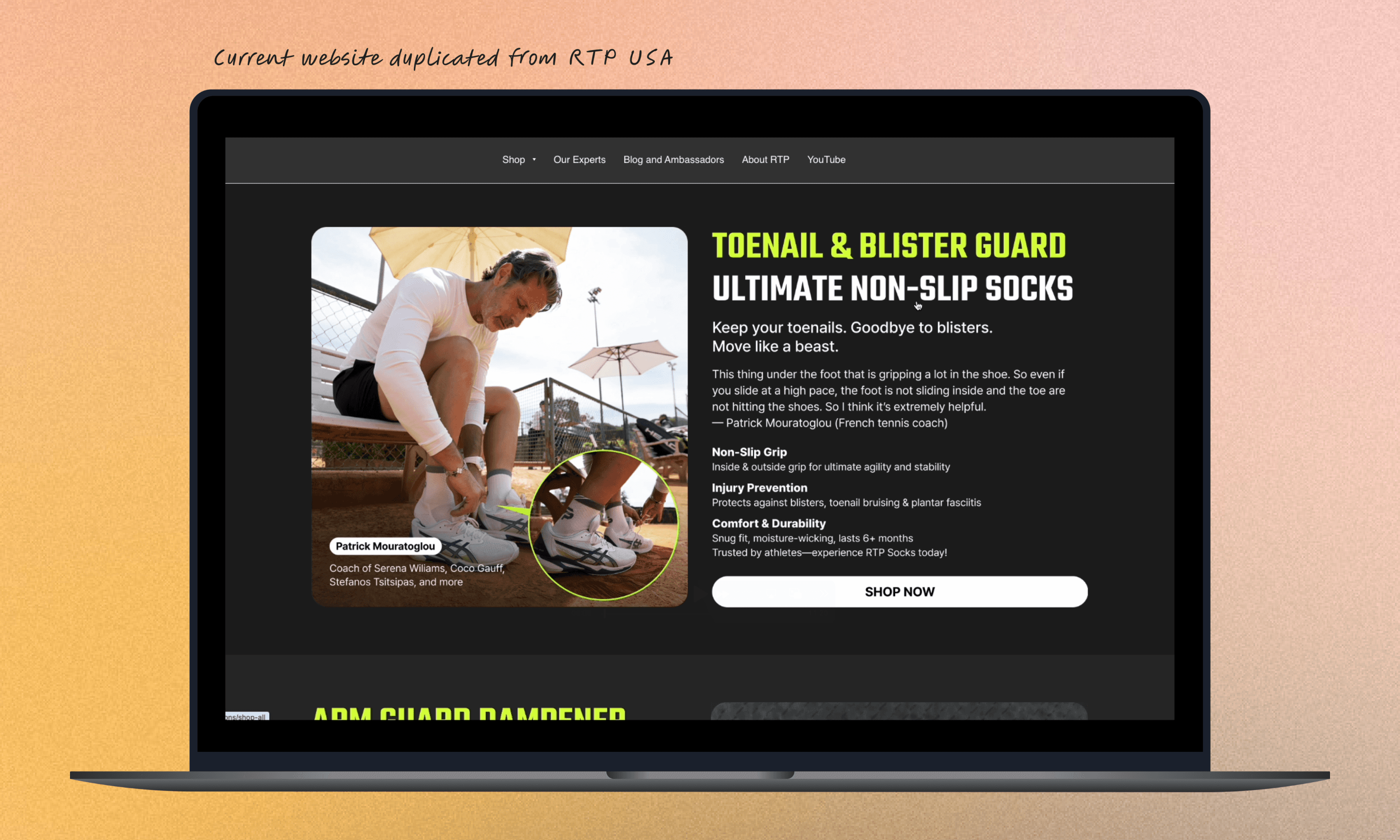
Three months post-launch with inconsistent sales, 1.5% conversion rate (below industry benchmark), and high bounce rates. Brand lacked positioning distinct from US parent site (which blended coaching content with products). December Boxing Week campaign required immediate conversion lift within 2-week sprint.
My Role
Growth-focused design leader.
Impacts
Conversion: 1.5% → 4.5% (3x, industry benchmark hit)
ROAS: Maintained during competitive holiday window
Scalability: Permanent templates, repeatable content model for multi-sport expansion
Search efficiency: Naming improved organic traffic, lowered CPC
Org velocity: Workshop template for launches, strategic credibility through problem diagnosis
The Core Problem
Framed as a UX issue, actually a growth strategy gap.
The Canadian brand lacked differentiation narrative or premium price justification and independent positioning from US parent (which relied on founder's coaching content). The website used jargon-heavy naming and created search friction. Their content didn't communicate the value proposition and sounded generated, while their target persona tended to be analytical and needed scientific proof.


Define Scope and Alignment
Reframed problem to unlock better solutions:
By digging into the real problem, the team’s focus was shifted from "improve website" to "define differentiation and convert skeptical buyers." I led a workshop with cross-functional partners to surface assumptions about target users and map buyer journey gaps. This helped position the challenge as a growth opportunity, not a design project, which also built strategic buy-in before jumping into design.
Brand and Content Strategies
Defined brand strategy as conversion multiplier:
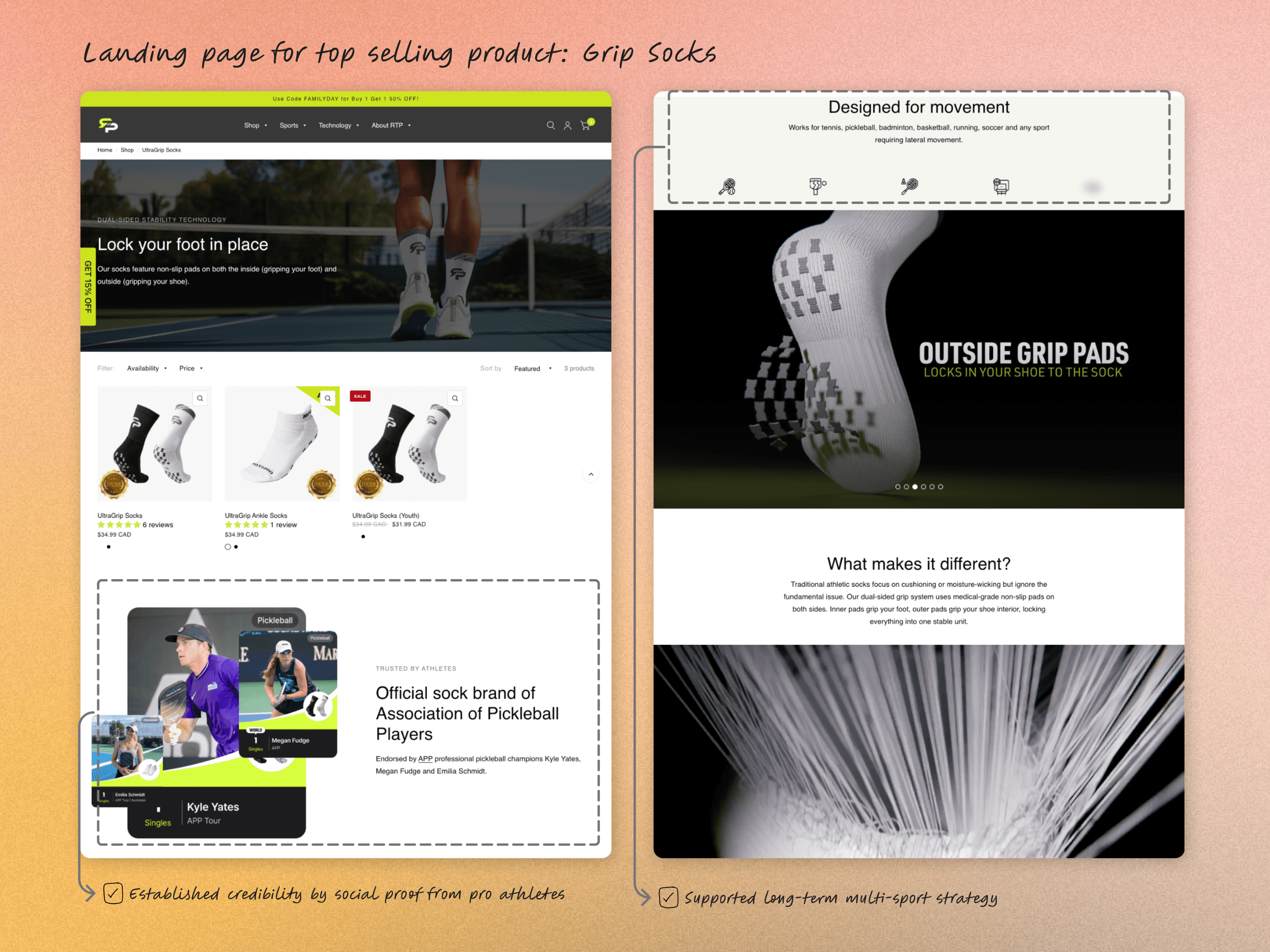
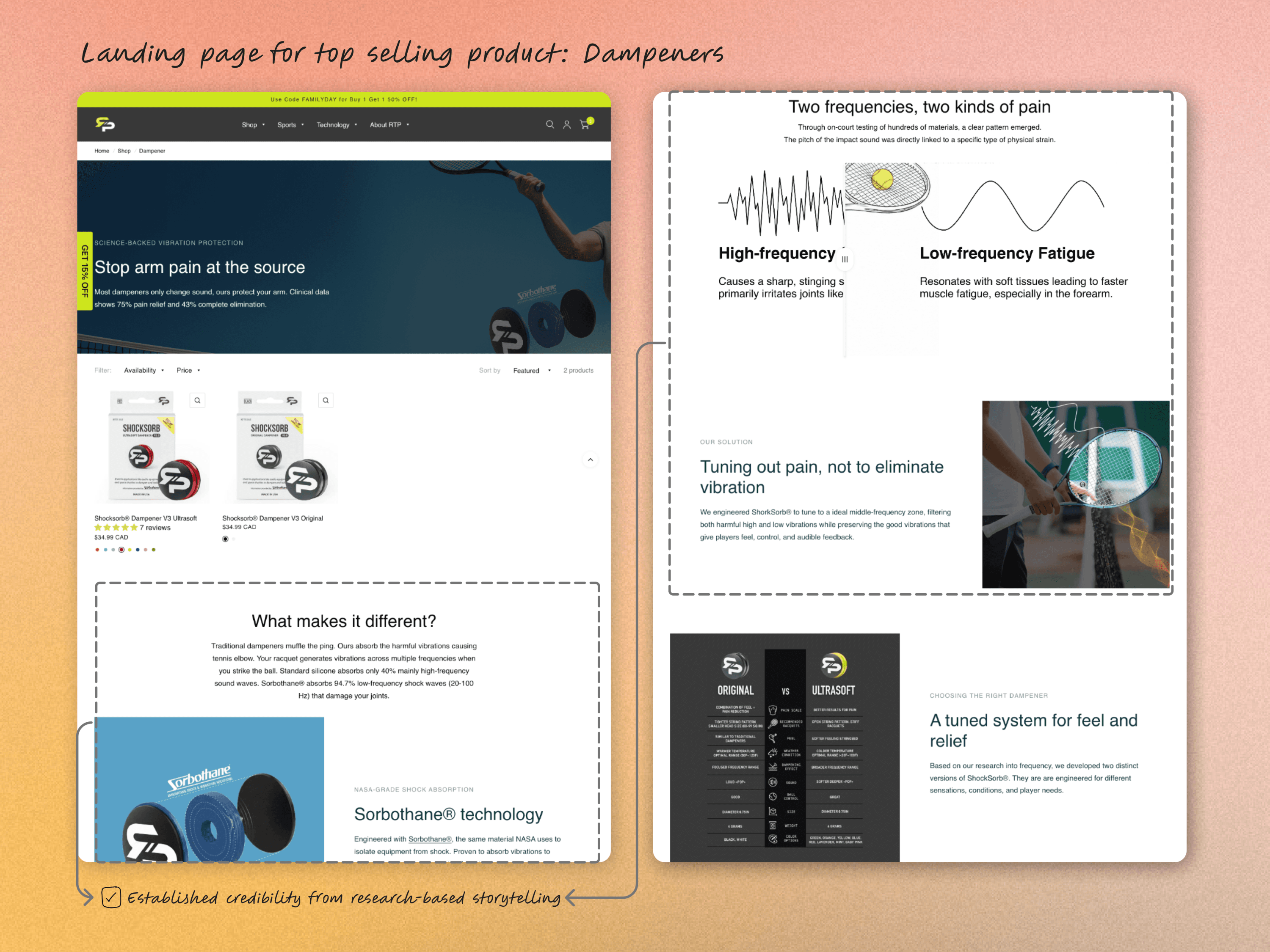
The brand was repositioned from product catalog to education-driven injury prevention authority. I created an audience-specific content framework: scientific storytelling (research, material innovation, mechanism explanation) for niche products; credibility signals (sponsorships, endorsements, social proof) for broad-market plays. This was established as a repeatable model for 2026 multi-sport expansion, which became a long-term strategic asset, not a short-term campaign tactic.
Key Decisions and Tradeoffs
Due to time constraints, I needed to align everyone fast.
I facilitated a workshop to get buy-in and diagnose business problems (positioning gap) instead of symptoms (low conversion). It surfaced conflicting assumptions about target users and business goals before designing solutions. This helped to build trust with the team under a tight timeline. Once we agreed on an implementation plan, I maintained alignment by creating a clear backlog with impact rationale for deferred features, showing tradeoffs explicitly.
Key Decisions and Tradeoffs
Prioritized highest-leverage interventions:
Based on traffic analysis and conversion funnel, I convinced the team to prioritize:
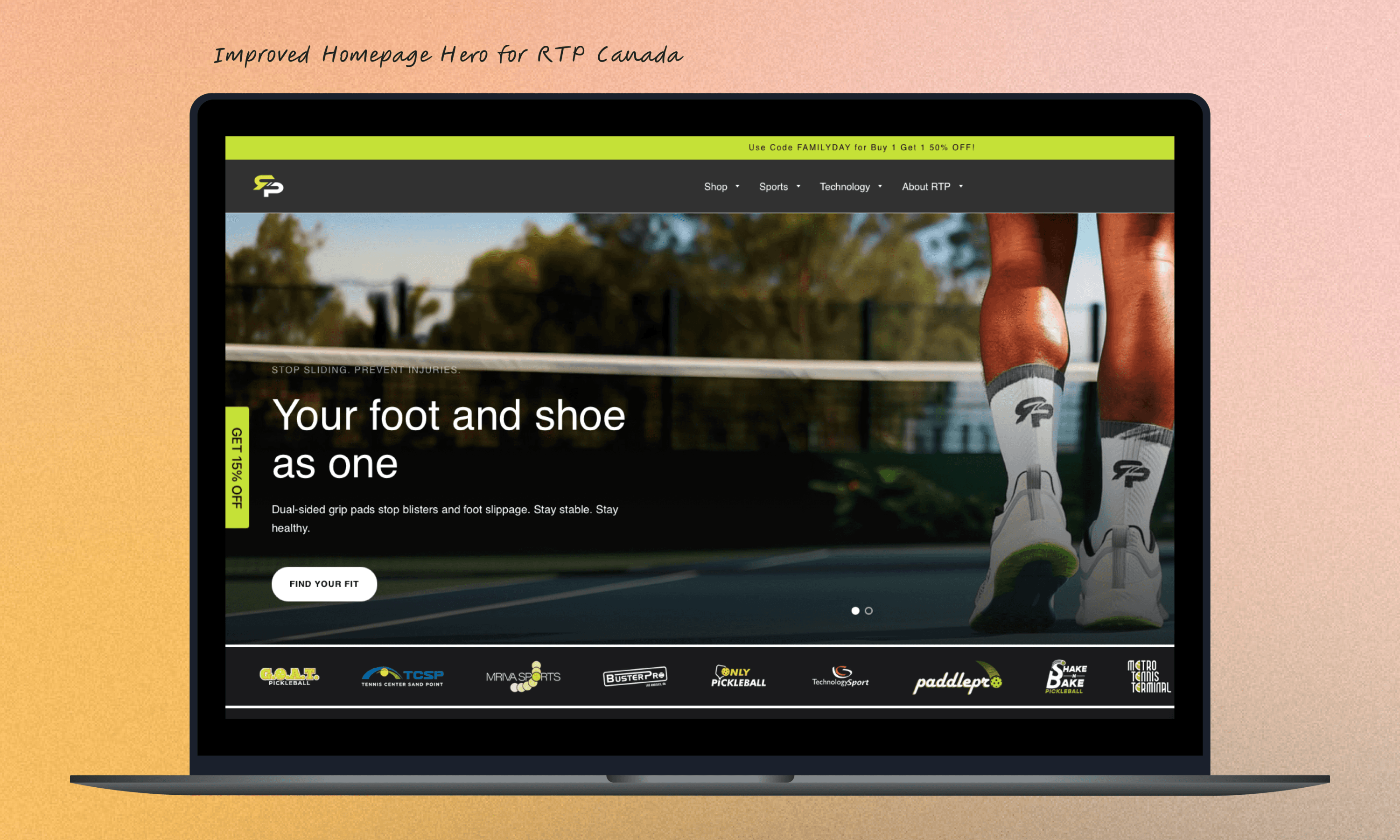
Homepage hero (60% site entry point, unclear value prop):
Problem: Doesn't communicate what brand sells or why it matters
Leverage: Fix once, affects majority of traffic
Action: Redesign for clarity, accessibility, SEO
Top 2 landing pages (80% paid traffic destination):
Problem: Ads redirect to generic collection pages (weak conversion)
Leverage: Conversion-optimized pages = immediate ROAS improvement
Action: Build dampener + grip socks pages, redirect ads
Product naming (site-wide jargon barrier):
Problem: Search friction + cognitive load + ad relevance penalty
Leverage: Affects discoverability, CPC, bounce rate across funnel
Action: Rename to match mental models and search volume
What didn't ship (and why):
Heel pads page (third product, 15% traffic vs. 80% for top 2)
Competitive comparison (high value, lower urgency)
Durability messaging (customer question, not primary objection)
Bundling/upsell (AOV play, requires cart logic changes)
To mitigate the tradeoffs, I created clear post-campaign backlog with prioritization rationale tied to:
Drop-off analysis (where users abandon funnel)
Customer support themes (what questions come up repeatedly)
Ad performance (which products have high CTR but low conversion)
Outcome
Positive outcome within time constraints
Conversion: 1.5% → 4.5% (3x lift, industry benchmark achieved)
Strategic foundation: Pages became permanent templates, established growth model for 2026 multi-sport expansion
Organizational: Workshop process became template for future launches, built cross-functional trust
Discoverability: Product renaming improved organic traffic and reduced paid search CPC
What I learned
Design leadership starts with problem reframing, then prioritization.
The team initially framed this as "improving the website." I reframed as "define differentiation and justify premium pricing"—a growth strategy problem, not UX. Reframing unlocked better solutions (brand positioning, content strategy, product naming) than jumping to wireframes.
After defining the problem, I advocated for 2 high-quality pages over 3 mediocre ones required justifying tradeoffs. Clear backlog with impact rationale (tied to metrics and feedback) maintained momentum post-campaign. Shipping smart beats shipping everything.
DISCOVER MORE